

Landscaping in Glen Waverley, from the clay up
I'm Michael. I run Regal Landscaping from Clayton South, about 15 to 20 minutes away depending on traffic. We've been landscaping across Melbourne's south-east since 2013 and hold 5.0 stars from 60+ Google reviews. Quotes are free with no call-out fee. Call 0489 952 492 or send a few photos through the quote form.
What we build here
Most jobs lean towards construction: levels, walls, drainage and paving first, then lawn and planting on top. A typical job draws on some of this:
- Retaining walls. Sleeper, block or rock, with drainage behind every one.
- Sites after a knockdown rebuild. Clearing the builder's leftovers, ripping compacted ground and bringing in topsoil.
- Dual occupancy and townhouse yards. Building the landscape plan that came with the permit, finished in time for the move-in.
- Instant turf. Sir Walter Buffalo for most family yards, laid on decent topsoil and never straight onto clay.
- Paving. Paths, side access and alfresco areas on a compacted base.
- Garden beds and planting. Screening along new fences, canopy trees, and plants that suit Monash's leafy streets.
- Artificial grass and irrigation. Fake grass where real lawn won't cope, and Hunter irrigation with a registered plumber on the team.
Clay under the lawn changes how we build
Like a lot of Melbourne's east, many Glen Waverley gardens sit on a shallow layer of topsoil over clay. Clay holds water through winter, then shrinks and cracks as it dries out in summer. Ground that moves like that is called reactive, and it shapes nearly every job we price around here.
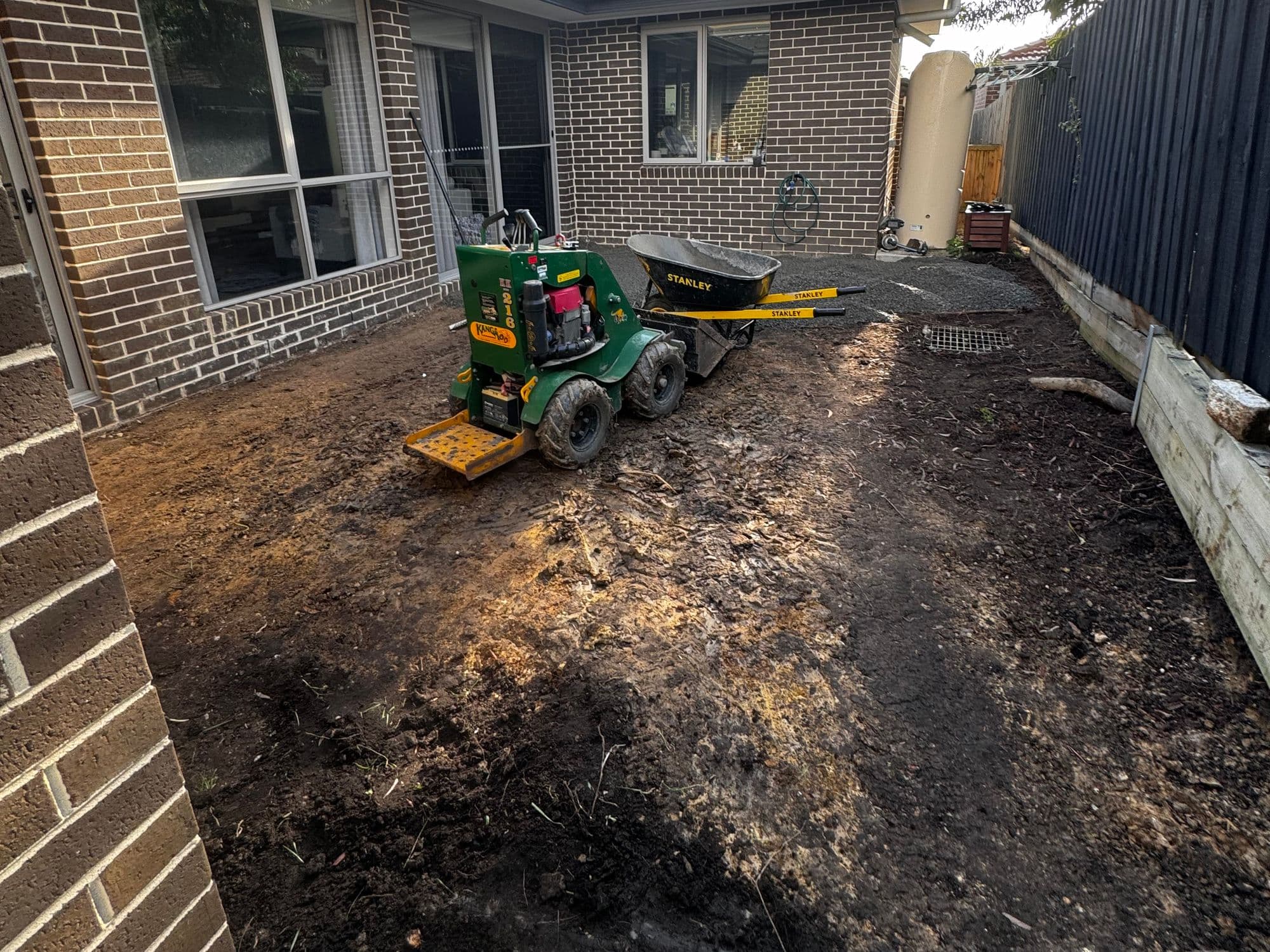
A knockdown rebuild makes it harder again. Months of machinery pack the clay down hard, and the original topsoil is often scraped off or buried. Lay turf straight onto that and the lawn sits in water after rain, then burns off when it turns hot. So the first part of our job is the part you never see: rip the compacted ground, bring in good soil and set the falls.
The second thing on clay is the house. Soak the ground hard against the slab, with a thirsty garden bed or a sprinkler line right up against the wall, and the clay on that side swells while the rest stays put. Big trees close to the house do the opposite and dry it out. Uneven movement is what cracks walls and footings, so we keep wet beds and irrigation a sensible distance off the house and slope the paving away from it.
Hilly streets between two creeks need proper walls
Glen Waverley isn't flat. The ground runs from river flats along Dandenong Creek on the eastern side up into a hilly stretch between Dandenong Creek and Scotchmans Creek. Plenty of blocks fall front to back or side to side, and that's where retaining walls earn their keep, turning a slope into a level lawn or a usable patio.
On clay, a wall is only as good as the drainage behind it. Water that can't get away builds up pressure, the clay swells, and sleepers start to lean or blockwork cracks. Every wall we build gets free-draining gravel and an ag pipe behind it, with somewhere for that water to go.
Sleepers suit low garden walls, but timber in wet clay won't last forever. Block and rock walls last much longer. For anything holding back real height, or sitting close to a boundary or the house, I'll recommend an engineer's design, and we'll check whether it needs a building permit before we start.
Got a slope that needs holding back?
Send a photo of the fall through the quote form and I'll come out and walk it with you.
Rebuilds, townhouses and the original gardens
Most of the suburb was built between the 1950s and the 1970s, mainly family homes on large blocks. Fifty-odd years on, a lot of those houses are coming down. Builders describe the suburb as one of Melbourne's busiest for knockdown rebuilds, and other blocks are being split up for townhouses.
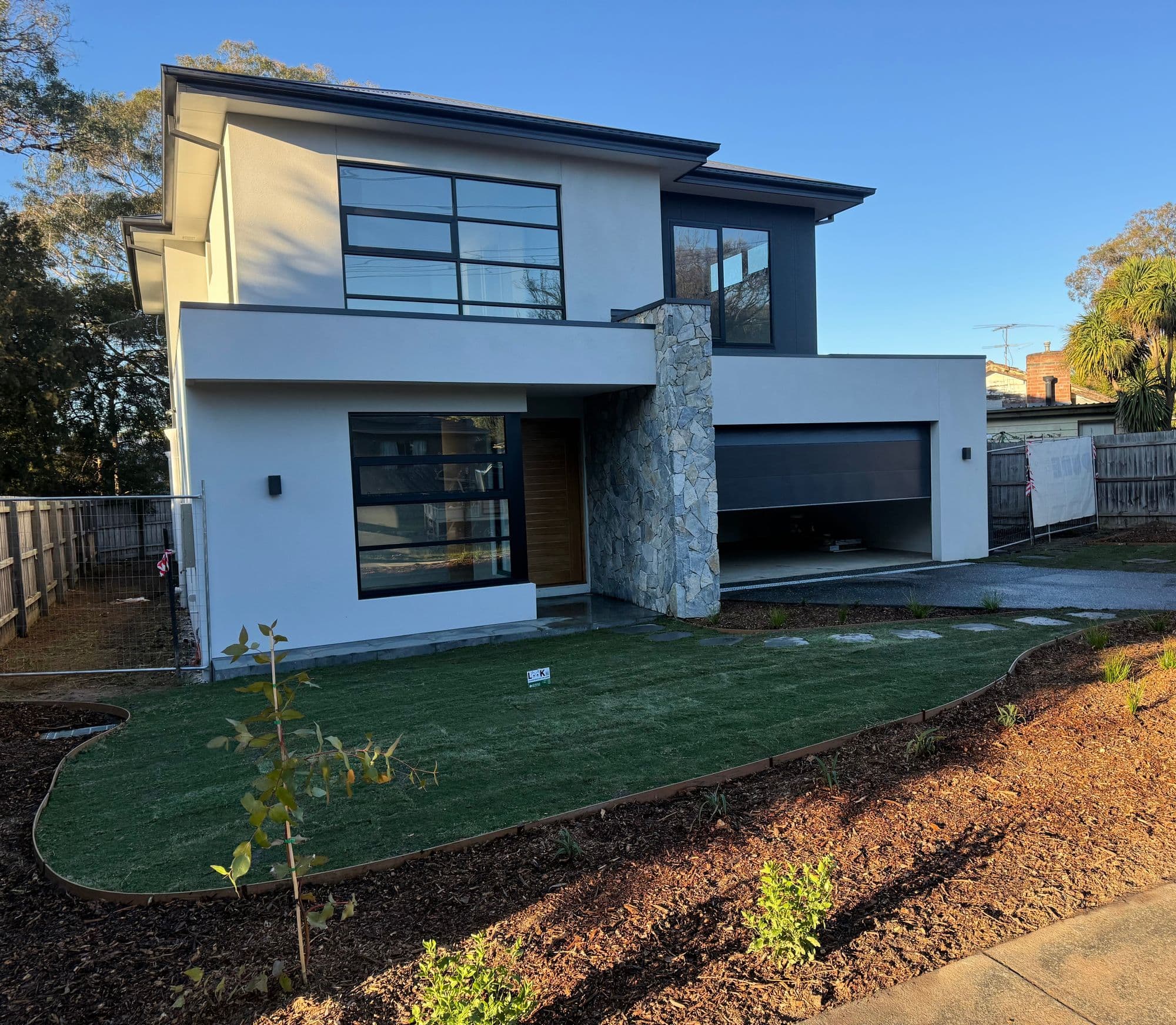
That leaves three different jobs. The original garden, where the question is what stays. The rebuild handover, all bare packed clay and new fences. And the townhouse or dual occupancy site, with smaller yards and landscaping that comes with strings attached.
Those strings catch people out. In Monash, a planning permit for new dwellings commonly comes with an endorsed landscape plan, plus a condition that the landscaping is finished before the dwellings are occupied. We build to that plan, and if something on it won't work on the ground, like lawn in a corner that never sees sun, I'll raise it early so you can sort it with council.
Check Monash's tree rules before anything comes out
Monash takes its trees seriously, and its planning scheme counts established canopy trees as part of the city's garden city character. Parts of the north and east of the municipality, including parts of Glen Waverley, are covered by a Vegetation Protection Overlay. Inside it you need a planning permit to remove a tree taller than 10 metres with a trunk more than 50cm around, measured 120cm above the ground. Separately, Victoria's canopy tree rules, in place since September 2025, can cover big trees near the front and back boundaries of residential blocks across Monash, overlay or not.
Dead trees and light maintenance pruning are generally exempt, but check before you cut. Council can tell you whether your tree is covered, and getting the permit is the owner's job. For us, it mostly means building around established trees rather than through them: digging by hand inside the root zone, lifting paths over roots instead of cutting through them, and choosing plants that cope with shade.
Nearby work, and how we quote
Our nearest finished work to Glen Waverley is just down the road in Oakleigh, where we laid a Sir Walter Buffalo lawn and put in irrigation, and we've finished jobs in Bentleigh East too. All up we've laid 15,000 square metres of turf, and we carry public liability insurance and WorkCover.
Here's how a quote works:
- Get in touch. Call 0489 952 492 or send photos through the quote form. If you have a site plan or an endorsed landscape plan, send that too.
- Site walk. I check the fall of the block, the state of the clay, where the trees sit and whether a machine can get down the side.
- Written quote. Labour, materials and tip fees broken out separately, so you can see what each part of the job costs.
- The build. Drainage and levels first, then walls and paving, with turf and planting last.
- Handover. You get a watering plan for the new lawn, then we check back in to see how it's taking.
Get a quote for your Glen Waverley garden
Call 0489 952 492 or send a few photos through the quote form, and tell me what you want the yard to do. The quote is free and there's no call-out fee.
We work right through the neighbouring suburbs too, including Mount Waverley, Oakleigh and our base in Clayton South. The full list is on our service areas page.
FAQs
How much does landscaping cost in Glen Waverley?
It depends on the block more than the suburb. Slope, compacted clay, machine access and how much has to be carted away all move the number, so I quote from a free site walk, not over the phone.
Do I need a permit for a retaining wall?
Low garden walls often don't, but taller walls, or walls near a boundary or the house, can need a building permit and an engineer's design. I'll tell you at the site walk which side of that line your wall is likely to fall.
Can you build the landscape plan for our dual occupancy?
Yes. Send the endorsed landscape plan and the permit conditions, and we'll price the build as drawn. Council generally wants it finished before anyone moves in, so book us while the build is still going, not after the keys are handed over.
Can I run garden beds and sprinklers right up against the house?
On clay, I'd keep them back. Watering hard against the slab swells the clay on that side while the rest stays dry, and that uneven movement is what cracks walls. We set wet beds and sprinkler lines a sensible distance off the house.
Can we remove an established tree to make room?
Ask council first. Parts of the suburb are in Monash's Vegetation Protection Overlay, where a tree over 10 metres tall with a trunk more than 50cm around needs a planning permit to come out, and the state canopy tree rules can apply near the boundaries anywhere in Monash. We'd usually rather design around a good tree anyway.
Will Sir Walter Buffalo grow well on clay?
Yes, if the soil under it is right. It handles kids, dogs and more shade than most lawns. On clay we lay it on a proper bed of topsoil so the roots go down instead of sitting in a wet layer. Then it needs watering every day for the first two to three weeks, and that watering is the difference between a lawn and a weed patch.
Do you cover all of Glen Waverley?
Yes, from the flats near Dandenong Creek and Jells Park across to the Mount Waverley side. We're about 15 to 20 minutes away in Clayton South, depending on traffic, and site walks are free.
Other areas we cover
- Landscaping Oakleigh
- Landscaping Bentleigh East
- Landscaping Cheltenham
- Landscaping Camberwell
- Landscaping Kew
- Landscaping Clayton South
- Landscaping Mount Waverley
- Landscaping Glen Iris
- Landscaping Hampton
- Instant turf Bentleigh
- Instant turf Bentleigh East
- Instant turf Brighton East
- Instant turf Hampton
- Instant turf Hampton East
- All service areas
Get a free quote in Glen Waverley
Tell us a little about the job and we'll get back to you to book a time to measure up. Prefer to talk it through? Call Michael.