

Landscaping in Hampton, built for bayside sand
I'm Michael. I run Regal Landscaping out of Clayton South, about 20 minutes from Hampton depending on traffic. We have been at it since 2013, we hold 5.0 stars from 60+ Google reviews, and we have laid lawns in Hampton before. The quote visit is free and there is no call-out fee.
What we build in Hampton
- Garden makeovers. A full rework of a yard that has stopped working for you. Often it is the last job once the house has been renovated.
- Paving and paths. Front entries, side paths, patios and alfresco areas, laid on a base that is compacted properly so the sand underneath cannot let them sink.
- Retaining walls and raised beds. Walls here are more often about lifting a bed, squaring off levels or holding a boundary than holding back a hill.
- Planting and garden beds. Hardy, salt-tolerant and indigenous plants where the sea breeze hits, softer choices in the sheltered corners.
- Lawns. Turf is one part of a bigger garden for us. If a new lawn is the main job, our page on instant turf in Hampton covers it properly.
- Artificial grass. For a shady side courtyard or a strip where real grass will never be happy.
- Irrigation. Hunter gear, with a registered plumber on the team. On free-draining sand, a proper watering system is often what keeps new planting alive through February.
Sand drains fast, so we build from the soil up
Hampton sits on the sandy country that runs down the bay side of Melbourne. Bayside Council's own gardening advice describes the local soils as largely sandy, nutrient poor, freely draining and high in salt. On a real block that is the reverse of the clay suburbs. Water and fertiliser run straight past the roots, and sand that dries right out can start shedding water instead of soaking it up.
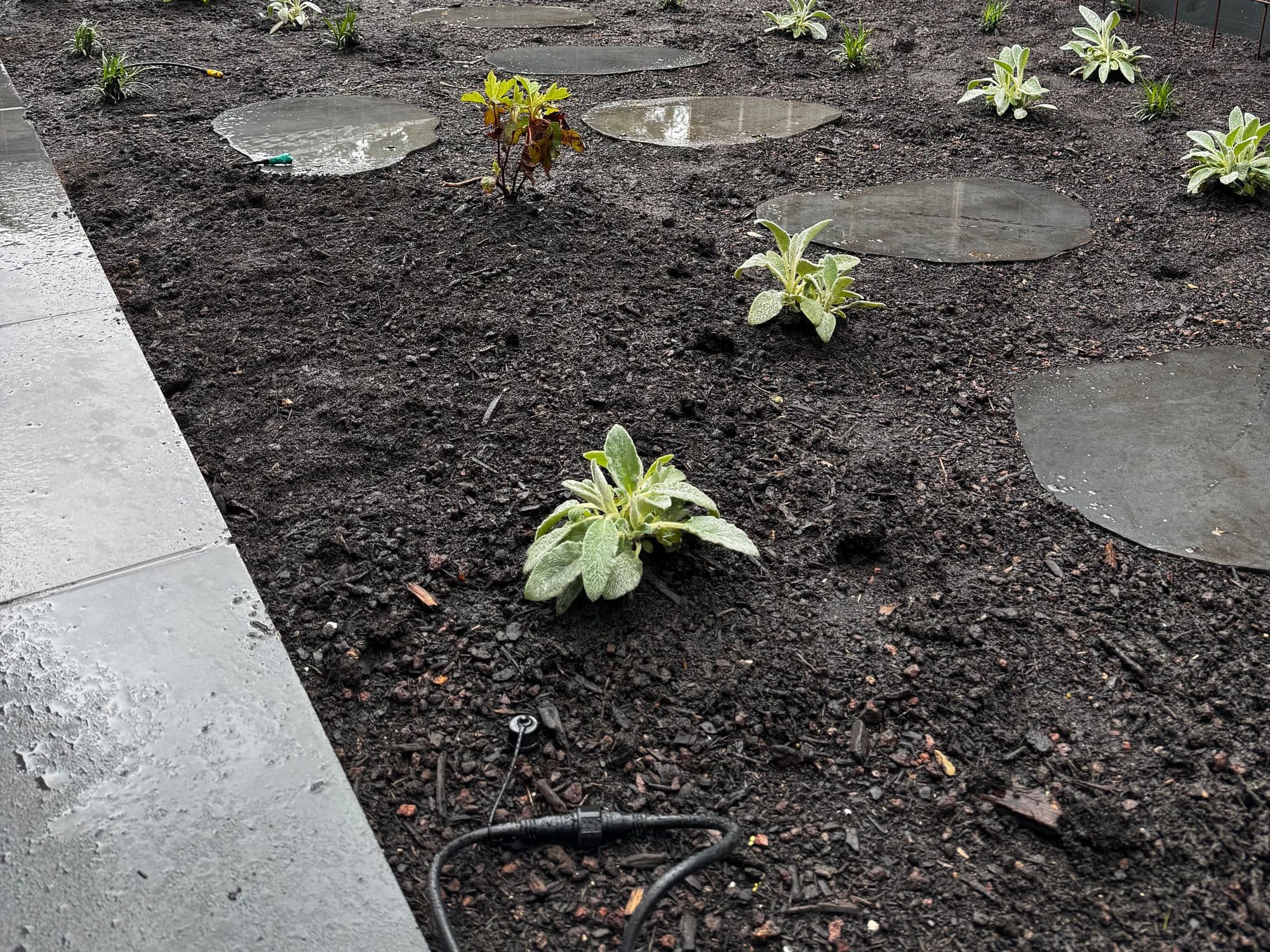
So most of the hidden work on a sandy block is soil. We dig organic matter and a good garden mix into new beds and under any new lawn, add a wetting agent where the ground has turned water repellent, and set the watering up to soak deep and less often. Paving gets the same thinking from another angle. Loose sand shifts when it gets wet, so the base goes down in compacted layers and the edges are held firm so nothing creeps.
Then there is the bay. Hampton's foreshore runs from Picnic Point to Brighton Beach, and on the streets closest to it the wind carries salt. Plenty of popular nursery plants scorch and sulk in that. Out in the weather we lean on salt-tolerant and locally indigenous species, and keep the leafy, delicate plants behind the house or a fence where they are sheltered. Bayside runs a community nursery that grows indigenous plants, and its species lists are a good place to start for the exposed spots.
Period homes, big extensions and the garden that comes last
Hampton began as market gardens and filled in quickly in the 1930s, when those gardens were subdivided. The War Service Homes Commission built 300 homes here too. Walk the streets either side of Hampton Street, Bayside's longest shopping strip, and that history still shows: Edwardian weatherboards, interwar bungalows and newer homes mixed in between, with many of the older places renovated or extended.
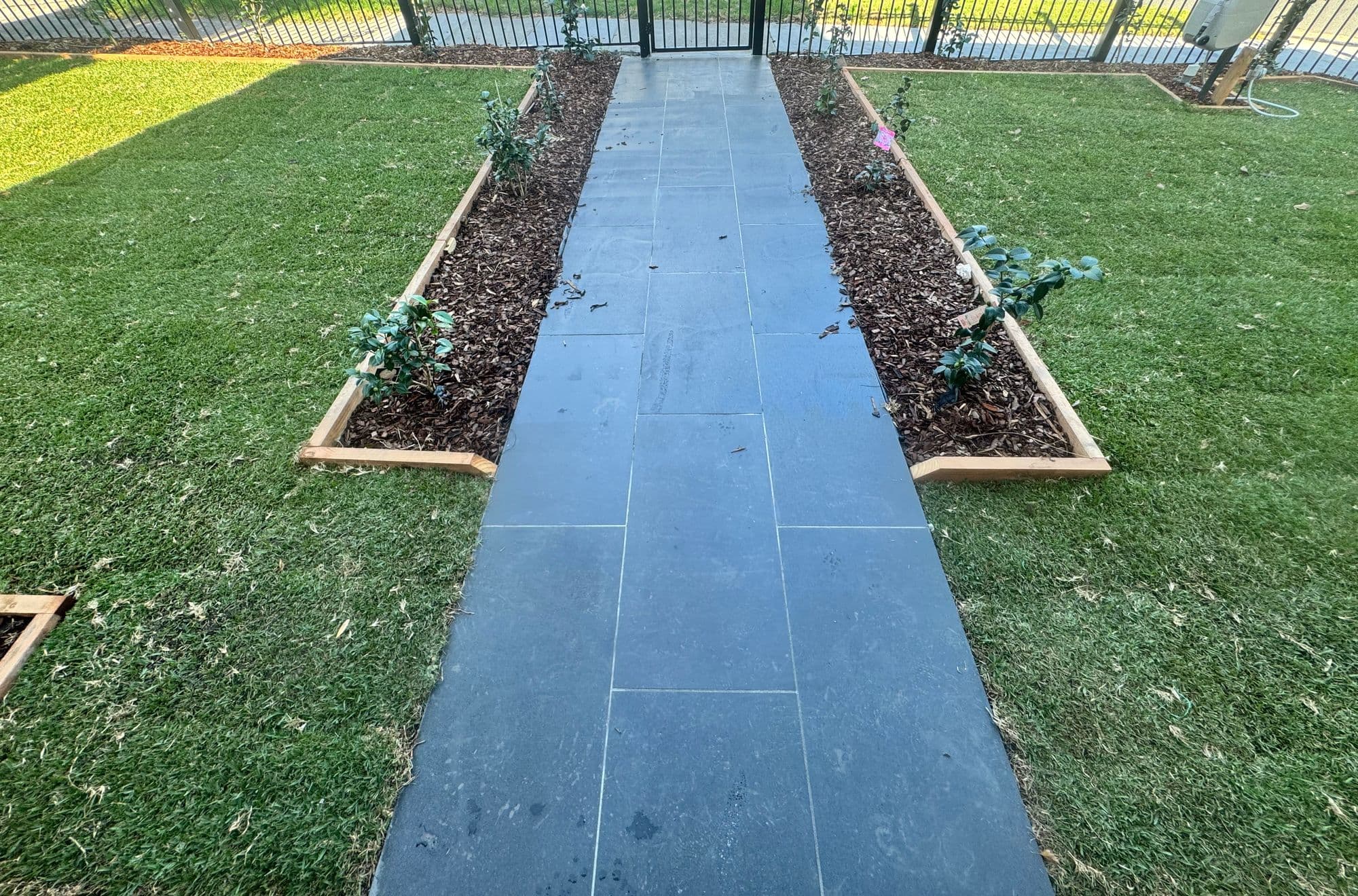
That shapes the work. In a suburb like this the garden is usually the last thing done after a renovation. The extension is finished, the builders have gone, and the backyard is compacted fill, offcuts and a few tired shrubs. Out the front, a period home often deserves better than a patchy lawn and a cracked path. There we keep things in proportion with the house: a proper path to the door, low hedging or planting that frames the verandah, and materials that suit the era instead of fighting it.
Where an older home has been knocked down and rebuilt, the new garden still sits on the same sand. Our new build landscaping work handles that in one job: levels, soil, paving, planting and lawn, so the yard is ready when you move in.
Check with Bayside before a tree comes out
Older gardens around here often come with big established trees, and Bayside protects a lot of them. Under Council's Local Law you need a permit to remove a tree on private land once its trunk circumference is more than 155cm, measured 1 metre above the ground. For a tree with several trunks, Council adds the four largest together. A tree on Bayside's Significant Tree Register needs a permit even to prune, and if your block sits under a planning overlay, other rules can apply as well, so check Council's planning map.
So I plan a garden around the good trees instead of assuming they will come out. That means digging by hand around roots, choosing plants that cope with shade under the canopy, and keeping heavy paving and walls back from the root zone. If a tree really must come out, Council has the final say, so talk to them first and we will build around whatever they decide.
From first call to handover
- Ring 0489 952 492 or send photos through the quote form. A few wide shots of the whole yard tell me the most.
- I come out and walk the block with you, look at the soil, trees, sun and side access, and talk through how you want to use the space. No call-out fee.
- A written quote follows, with labour, materials and waste each priced on their own line.
- We book a start date and tell you early if heavy rain is going to move it.
- On site we work clean, sweep up every day and keep the street side tidy for the neighbours.
- At handover we go through watering for the new planting and lawn, which matters more on sand than almost anywhere.
Spend the budget underneath first
No two yards here are alike, so I price from the block, not from a page. What I can tell you is where the money does the most good. On sand, the work you never see is the work that keeps the garden alive: soil improvement, a compacted base under paving and watering that reaches the roots.
If the budget is tight, I would rather build a smaller patio and a garden that gets through its first summer than a big one sitting on poor ground. The cheapest quote usually saves its money in exactly those hidden layers, and on sand it shows by the second summer.
Not sure what your yard needs first?
Send a few photos through the form and I will tell you where the budget should go before anything else.
Get a quote for your Hampton garden
Regal Landscaping is family owned, and I am the one who comes out to look at your yard. We have landscaped Melbourne's south-east since 2013, laid 15,000 square metres of turf and hold 5.0 stars from 60+ Google reviews. We carry public liability insurance and WorkCover, and irrigation plumbing is done by a registered plumber on the team.
Call me on 0489 952 492 or send a few photos through the quote form. The visit and the quote are both free. Close by, we also lay turf in Hampton East and do landscaping in Cheltenham, and every suburb we cover is on our service areas page.
FAQs
How much does landscaping in Hampton cost?
It comes down to the job, so I do not quote over the phone. I come and look at the block for free, then you get a written quote with labour, materials and waste set out separately. On sandy ground some of the budget always goes into the soil, and the quote shows you how much.
Do I need a permit to remove a tree in Hampton?
Possibly. Bayside wants a Local Law permit once a trunk measures more than 155cm around at 1 metre high, and on a multi-trunk tree the four biggest trunks are added together. Trees on the Significant Tree Register need a permit even for pruning. Check with Council before you plan a garden around a tree coming out.
What can I plant on the nature strip in Bayside?
Yes, within Bayside's guidelines. Drought-tolerant indigenous ground covers, grasses and low shrubs can go in without approval if you follow Council's rules, which include keeping plants low and leaving space clear by the kerb and the footpath. Synthetic turf, irrigation and rocks are not allowed. Anything outside the guidelines needs a permit, so read Council's nature strip page first.
What grows well close to the beach?
Pick salt-tolerant and indigenous plants for anything that faces the bay breeze, and keep soft, leafy plants in sheltered spots. Bayside's indigenous plant lists and community nursery are a sensible starting point. At the quote visit I will suggest plants for your exact spot.
Will paving stay level on sandy ground?
Yes, if the base is built for it. We dig out, lay and compact the base in layers, use concrete where the stone needs it, and hold the edges so sand cannot wash out from underneath. Skip that and paths start to dip and rock within a couple of years.
Do you work in Hampton?
Yes. We come from Clayton South, about 20 minutes away, and the suburb sits well inside the area we cover. We have laid lawns here before and work across the bayside suburbs and the rest of the south-east.
What should I have ready for the quote visit?
A rough idea of how you want to use the yard, any plans from your builder or architect, and a budget range if you have one. Photos help but are not essential. If the house is mid-renovation, tell me when the builders expect to finish.
Other areas we cover
- Landscaping Oakleigh
- Landscaping Bentleigh East
- Landscaping Cheltenham
- Landscaping Camberwell
- Landscaping Kew
- Landscaping Clayton South
- Landscaping Glen Waverley
- Landscaping Mount Waverley
- Landscaping Glen Iris
- Instant turf Bentleigh
- Instant turf Bentleigh East
- Instant turf Brighton East
- Instant turf Hampton
- Instant turf Hampton East
- All service areas
Get a free quote in Hampton
Tell us a little about the job and we'll get back to you to book a time to measure up. Prefer to talk it through? Call Michael.