

Paving Contractors in Melbourne
- 60+ five-star Google reviews
- Family-owned since 2013
- $5M public liability
- Based in Clayton South
We're family-owned, based in Clayton South and paving since 2013. Michael quotes every job himself: he walks the site, checks the levels and where the rain will go, and sends a written quote before anything gets dug up. The same crew then does the work from start to finish.
What paving do we lay?
We lay paving for patios, alfresco areas, front paths, side paths, step pavers, pool surrounds and driveways. The materials are sawn bluestone, bluestone crazy paving, clay brick (new or recycled), travertine and concrete pavers. We prepare the base, set the falls, lay the paving, fill or grout the joints, and seal the stone that needs it.
- Patios and alfresco areas, laid to fall away from the house
- Front entries and paths in brick or banded bluestone
- Step pavers set in pebbles, lawn or artificial grass
- Crazy paving, fitted piece by piece and grouted
- Pool surrounds in bluestone or travertine
- Driveway paving over a concrete base
- Relaying old pavers, or recycled bricks you already own
Paving is often one part of a bigger job. If a slope has to be held back first, we build the retaining wall before any paving goes down. Around the paving we can lay new turf or artificial grass, so the yard is finished in one go instead of waiting on another trade.
One thing we don't do is pour plain concrete driveways. We pour a concrete base under paving when the job needs one, but a straight concrete or exposed aggregate driveway is a job for a concreter.
Which paving material suits your yard?
For most south-east Melbourne yards, sawn bluestone is the hardest-wearing all-rounder. Brick suits older homes and heritage relays, travertine stays cooler around a pool, concrete pavers keep the cost down on bigger areas, and crazy paving suits curved paths and period gardens. Whatever you pick, the base underneath matters more.
| Material | Look | How it wears | Best for |
|---|---|---|---|
| Sawn bluestone | Dark blue-grey, clean cut edges | Very hard. Lasts decades and darkens when wet | Patios, front paths, driveways, pool surrounds |
| Bluestone crazy paving | Irregular pieces fitted like a jigsaw | Very hard once grouted on a solid base | Curved paths, courtyards, period homes |
| Clay brick, new or recycled | Warm reds or mixed tones, herringbone or stretcher bond | Tough. A broken brick can be lifted and replaced | Paths and patios at older brick homes |
| Travertine | Pale cream with natural pitting | Softer than bluestone and needs sealing | Pool surrounds, lighter modern courtyards |
| Concrete pavers | Even sizes, wide colour range including charcoal | Good. Colour can fade over the years | Bigger patios, side paths, step pavers |
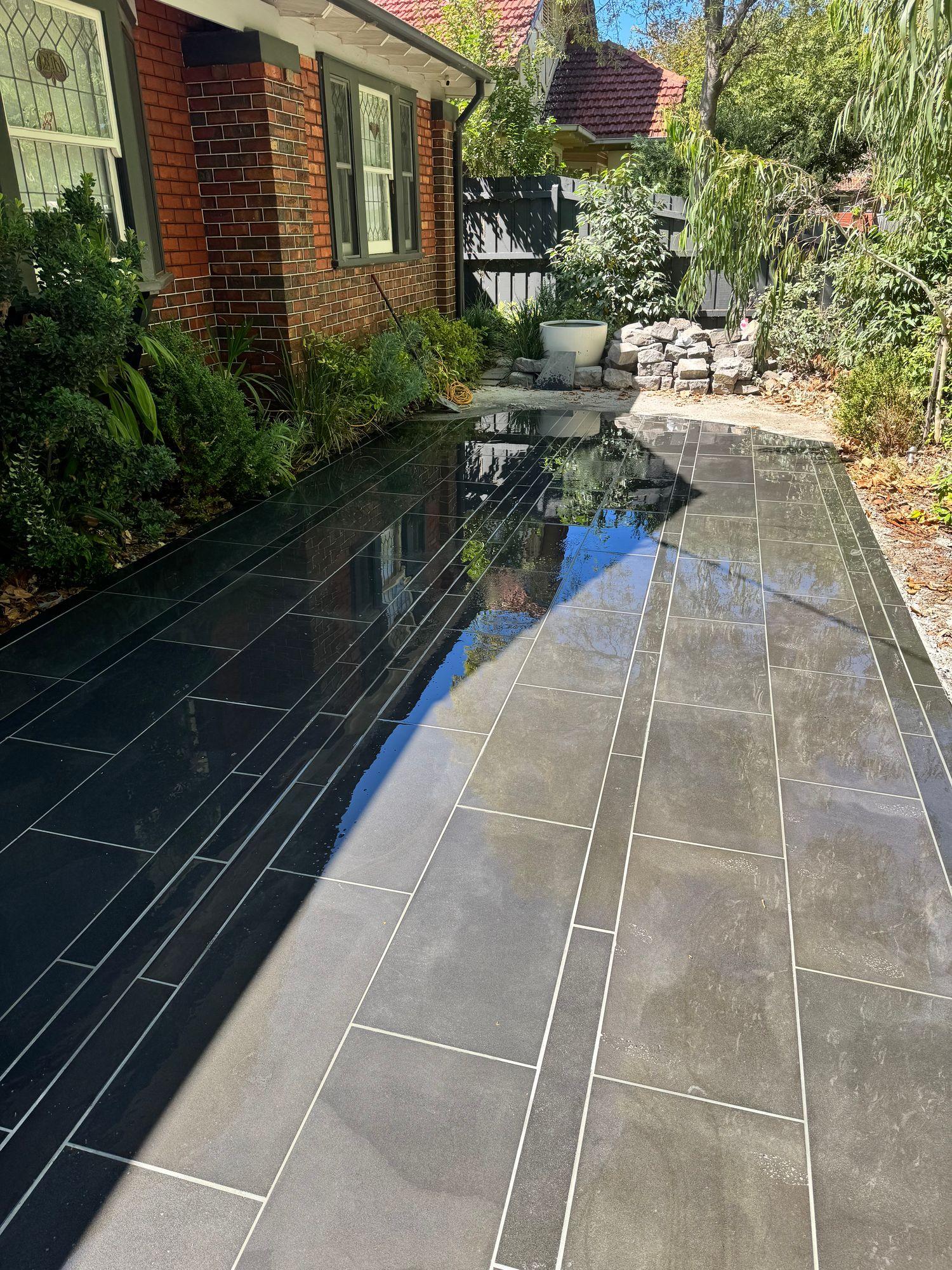
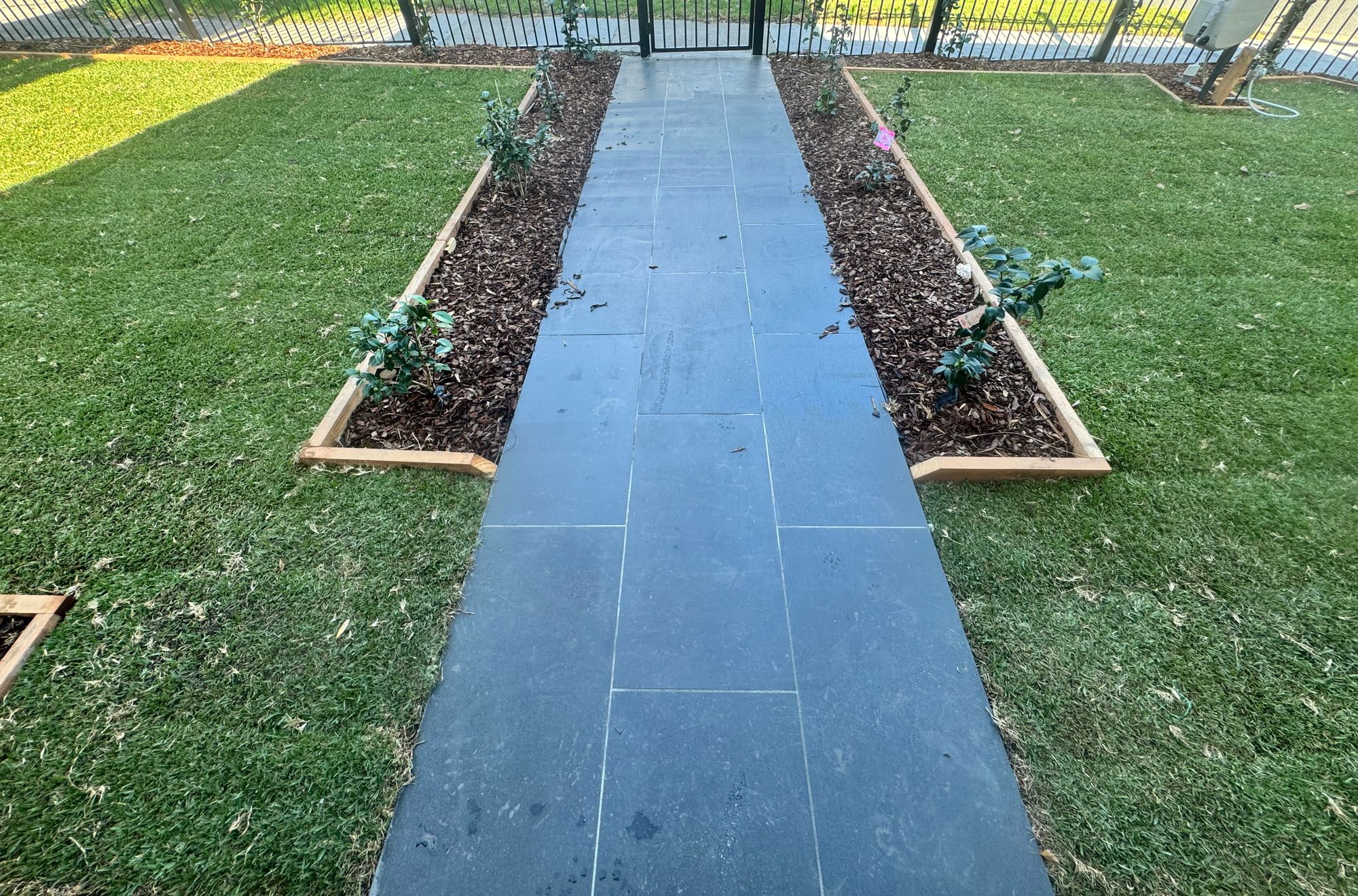
Sawn bluestone is Melbourne's own paving stone and the material most of our paving photos show. It's dense, it handles feet and car tyres, and it looks right against a red brick bungalow or a new rendered home. Narrow bands across a long path break it up nicely.
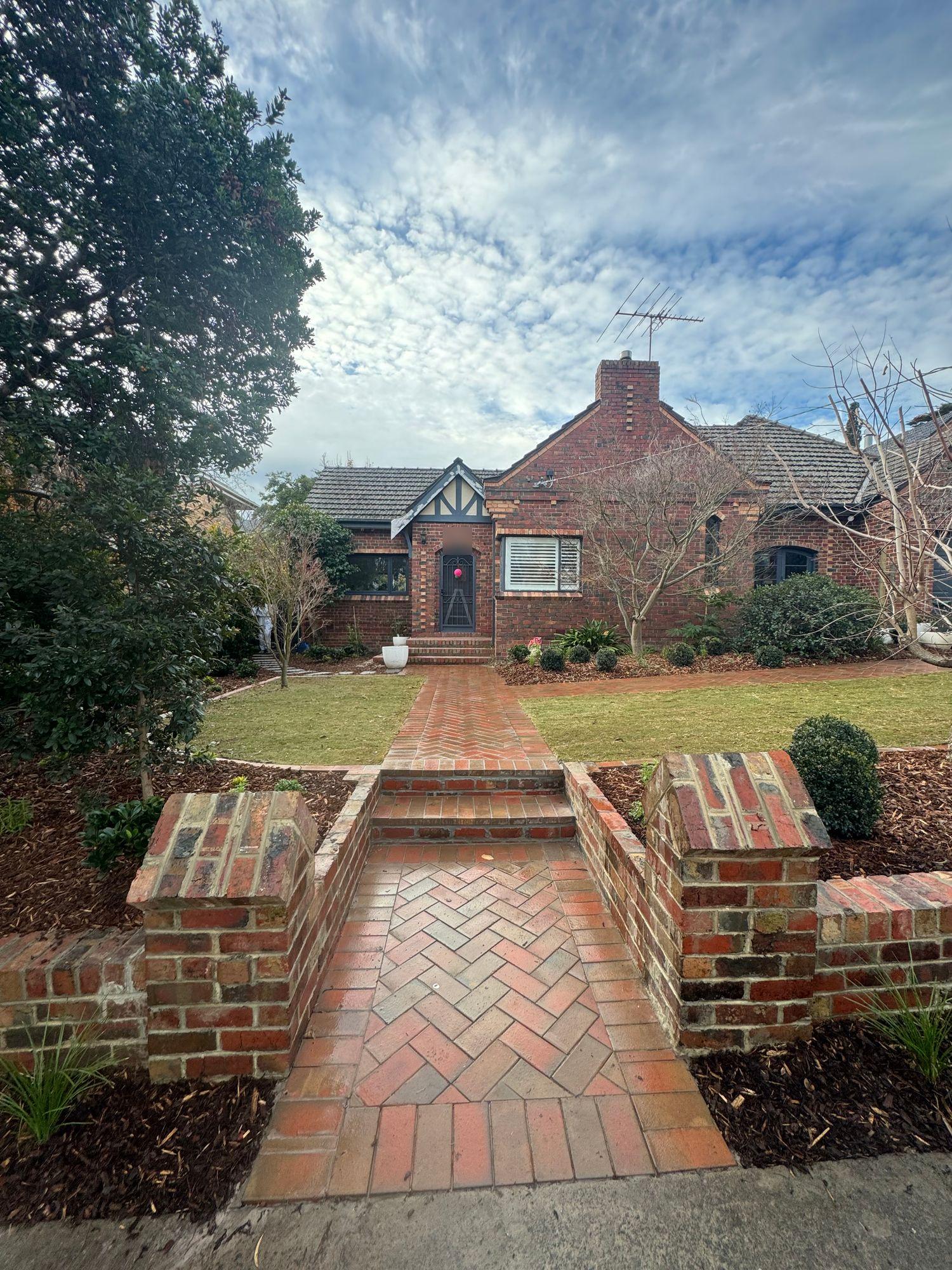
Brick paving belongs with the older homes found around the inner south-east. Recycled bricks look the part, but they vary in size and thickness, so getting them level and the pattern consistent takes patience on every row.
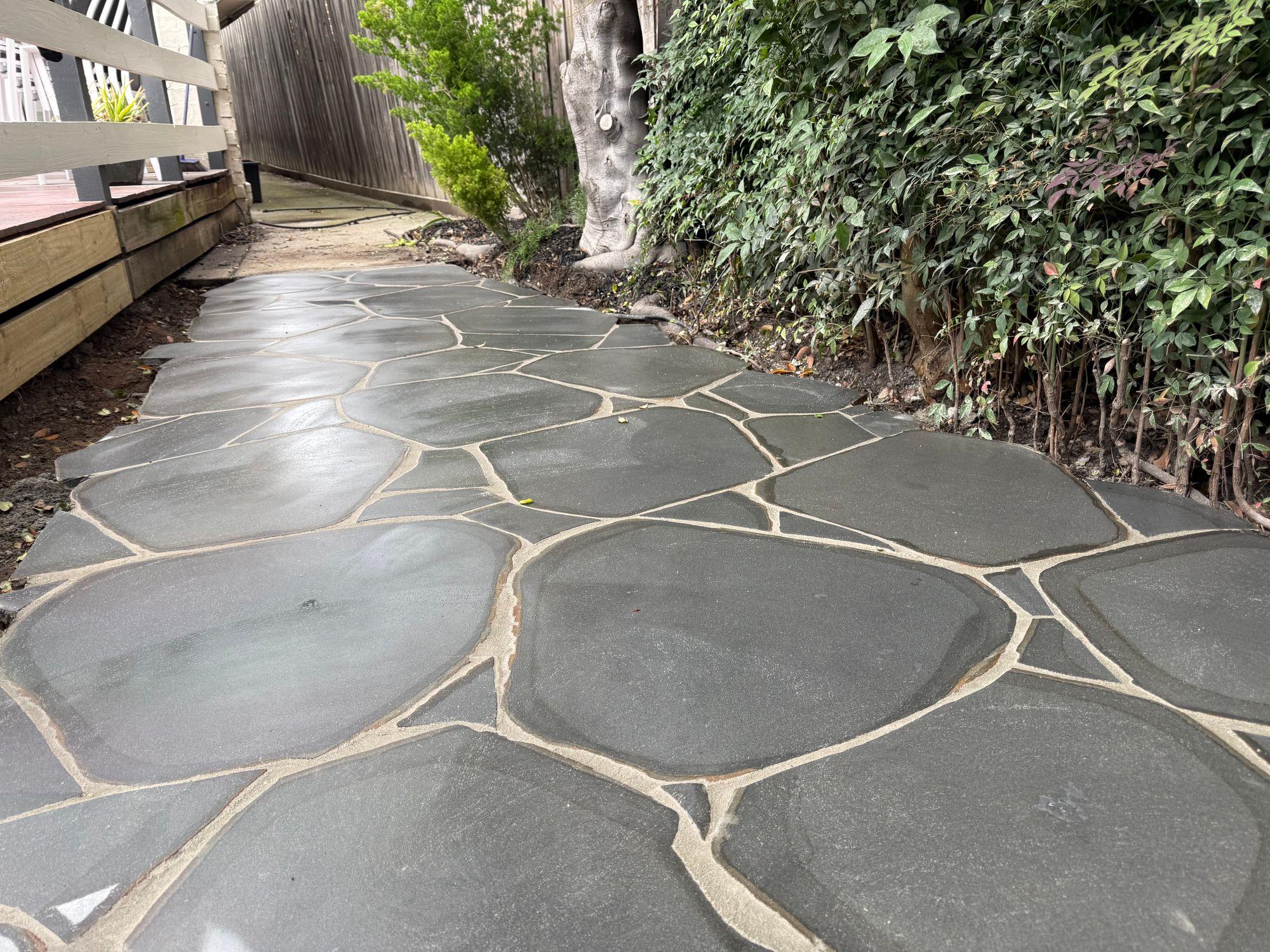
Crazy paving is the slowest to lay. Every piece is chosen, trimmed and fitted by hand, then grouted, which is why it sits at the top of the price range. On a big open area, large pavers usually make more sense for the money.
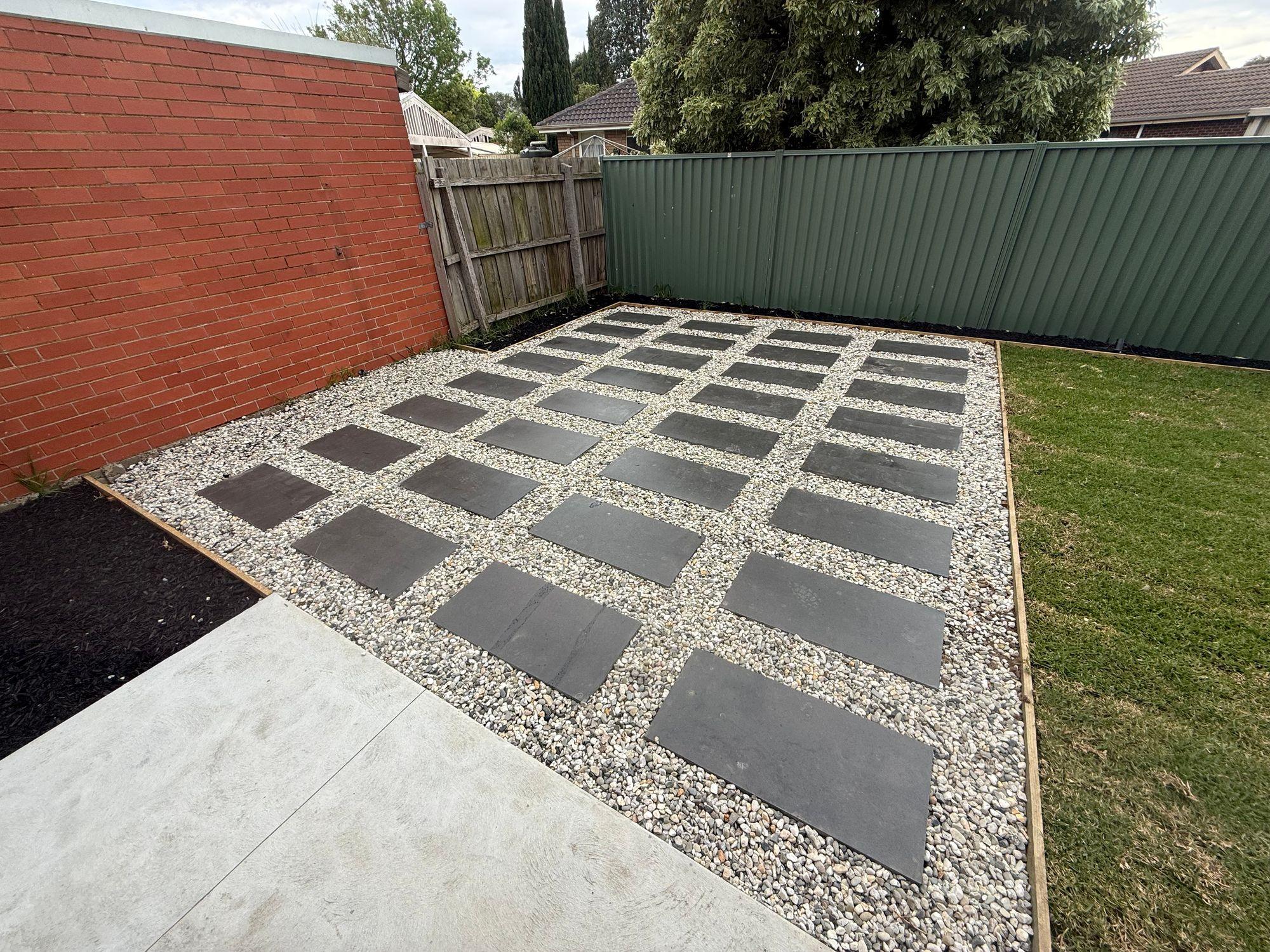
Travertine and concrete pavers come in large formats that cover ground quickly. Charcoal concrete pavers set in pale pebbles are a tidy, lower cost way to run a path across a yard.
How much does paving cost in Melbourne?
Every paving job is priced after a free site visit, because the material, the base and what has to come out first change the cost more than the size. Concrete pavers on a crushed rock base sit at the lower end. Sawn bluestone and crazy paving sit at the top, especially when they need a new concrete base. Removing old concrete, drains and steps are priced on top.
| Job | What goes under it |
|---|---|
| Step pavers in pebbles or lawn | Compacted crushed rock |
| Concrete paver patio or path | Crushed rock, then a screeded sand bed |
| Brick path or patio | Crushed rock, then a mortar or sand bed |
| Sawn bluestone patio | Crushed rock and mortar, or a concrete base |
| Crazy paving | Concrete base, mortar bed, then grout |
| Driveway paving | Concrete base built for the weight of a car |
A per-metre figure never tells the whole story. These are the things that move a paving quote up or down:
- Access. If no machine fits down the side, the dig-out and the base go in by wheelbarrow.
- What's there now. Breaking out old concrete or pavers and carting it away adds labour and tip fees.
- The base. A new concrete base costs more than crushed rock, but some jobs need one.
- Levels and steps. Sloping ground, steps and edges take longer than a flat square.
- Drainage. A strip drain at the back door, or pits raised to the new level, are extra items.
- Who supplies the pavers. We're happy to lay bricks or pavers you've bought yourself.
Every quote is written up after the site visit, with the base, the paving, any removal and the clean-up as separate lines. That makes it easy to compare with other paving contractors, line by line.
Want a price for your paving?
Send a few photos and rough measurements through the quote form, and Michael will call to book a time to look at it.
The base decides how long paving lasts
Pavers rarely fail by themselves. They sink, rock or crack because of what's underneath, so most of the hours on a paving job go into the layers you never see again.
We dig out to the depth the paving needs, take the spoil away, and compact a crushed rock base. What goes on top of that depends on the paver. Concrete pavers go on a sand bed screeded flat along steel rails, the way we laid a paved area beside a new lawn in Richmond. Brick and sawn bluestone usually go on a mortar bed, mixed with bondcrete for extra grip. Crazy paving and driveways get a concrete base first, so nothing works loose.
The soil changes the job too. The sandy suburbs near the bay drain quickly, but sand moves if the base isn't locked in. Further east, heavy clay holds water through winter and shrinks in summer, so the drainage under and around the paving matters even more.
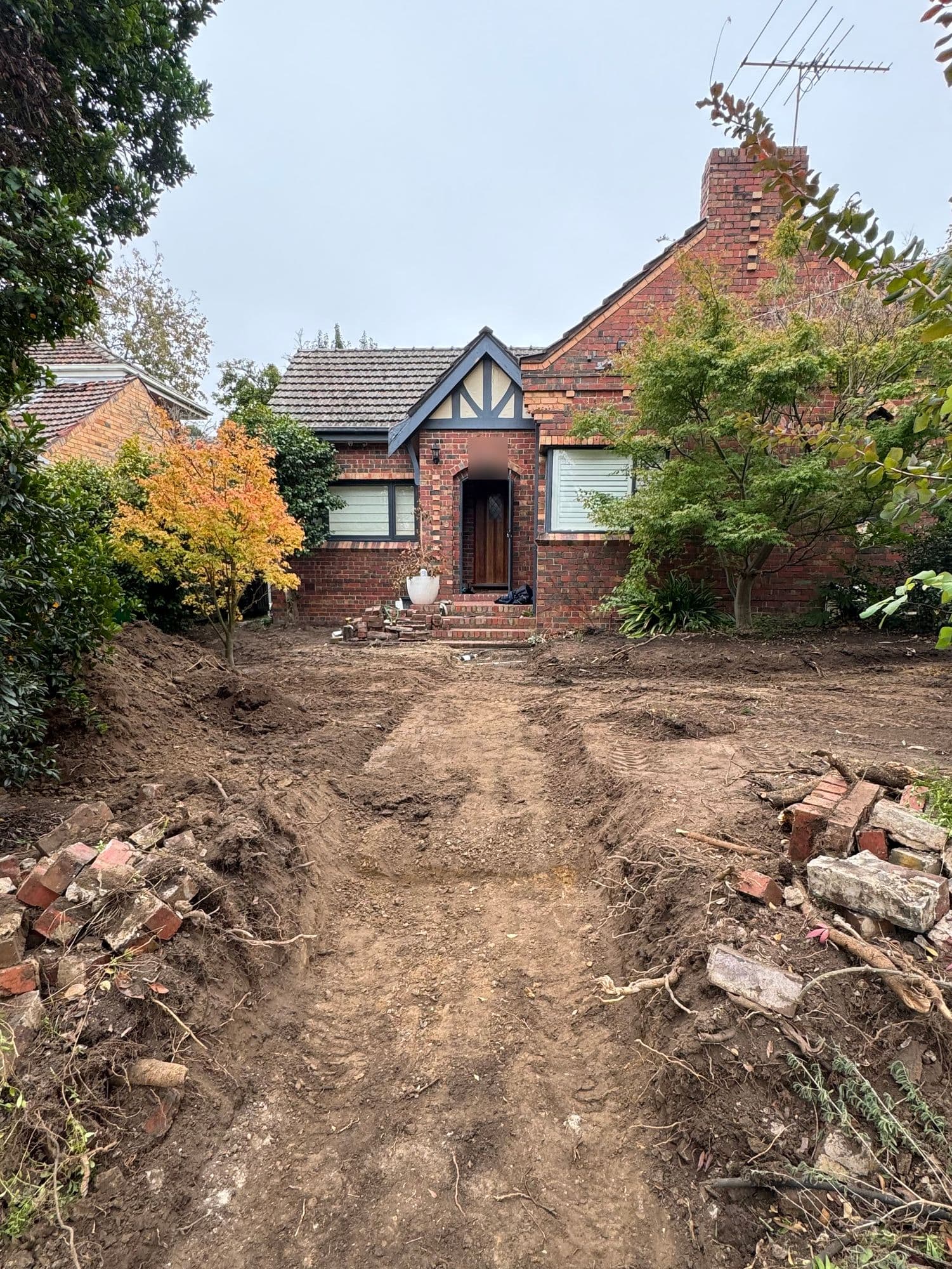
Dig out and set levels
The old surface comes out, the spoil is carted away, and string lines go up so the finished paving falls the right way.
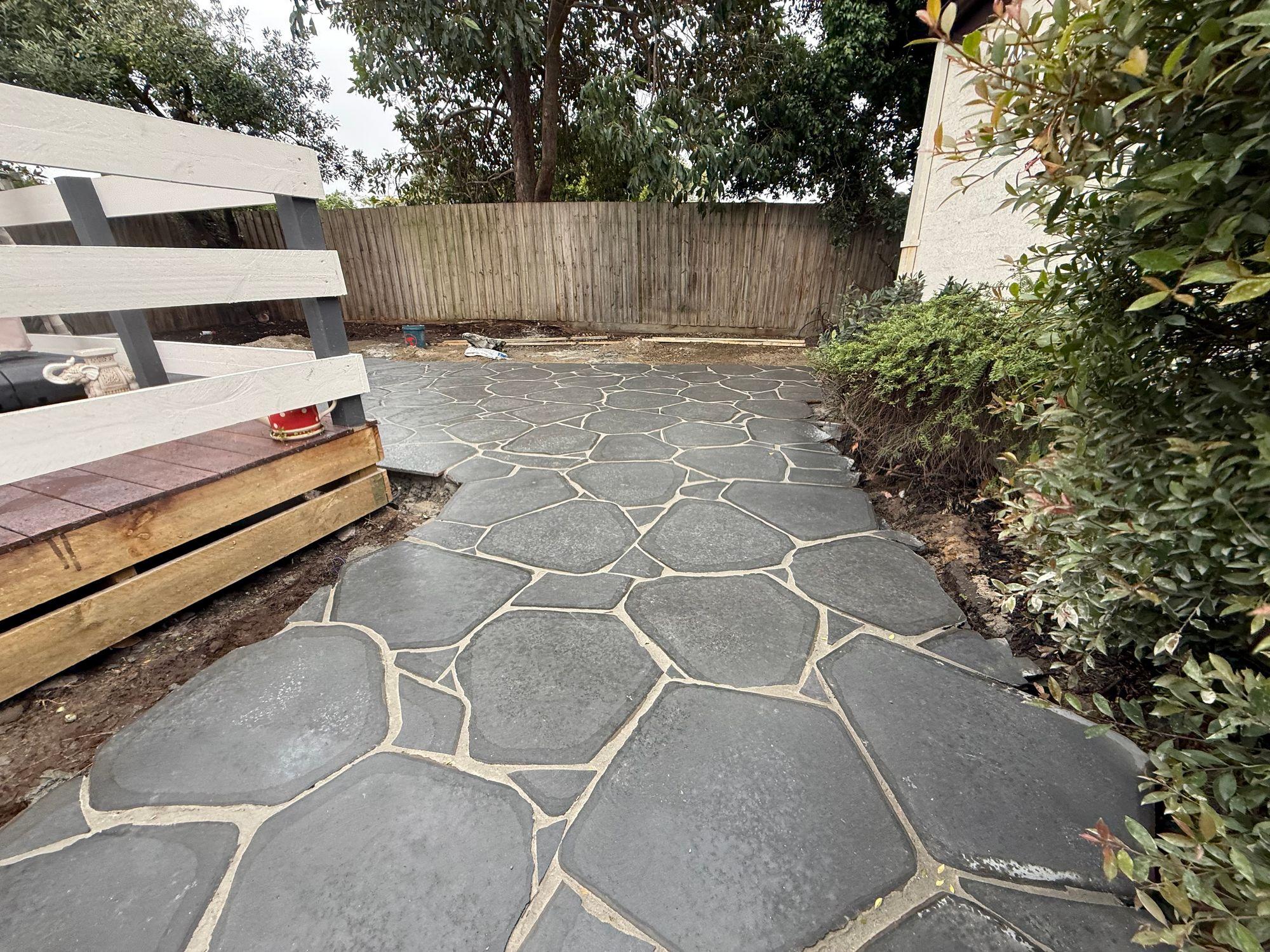
Base and bedding
Crushed rock is compacted, or a concrete base poured, then each paver or stone is bedded on sand or mortar.
Grout and clean
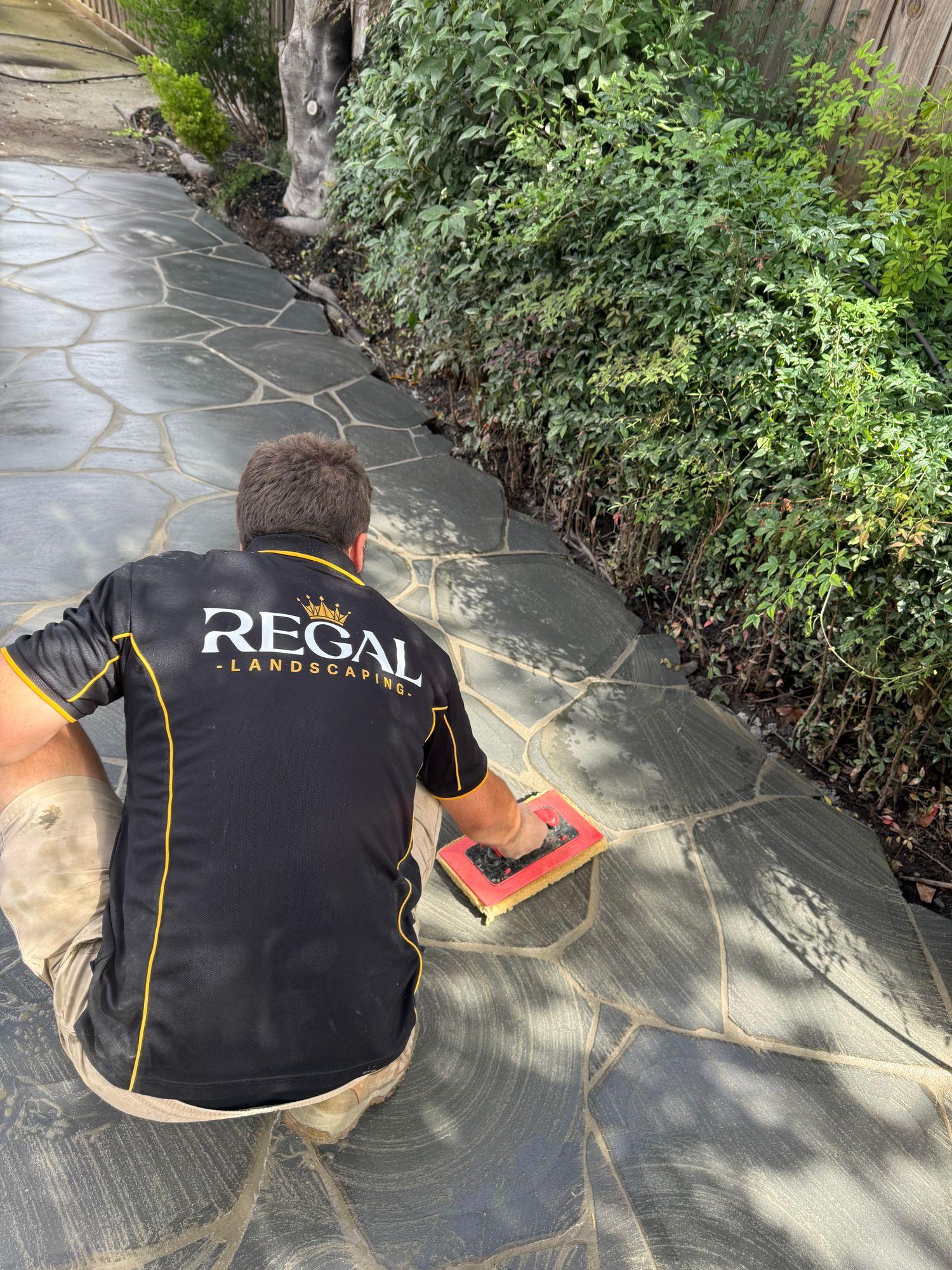
Joints are grouted or filled, and the surface is sponged clean before the grout has a chance to stain.
Seal and finish
Natural stone gets sealed once it's clean and dry, edges are tidied, and the site is left swept.
Photos from our own paving jobs.
How should paving fall for drainage?
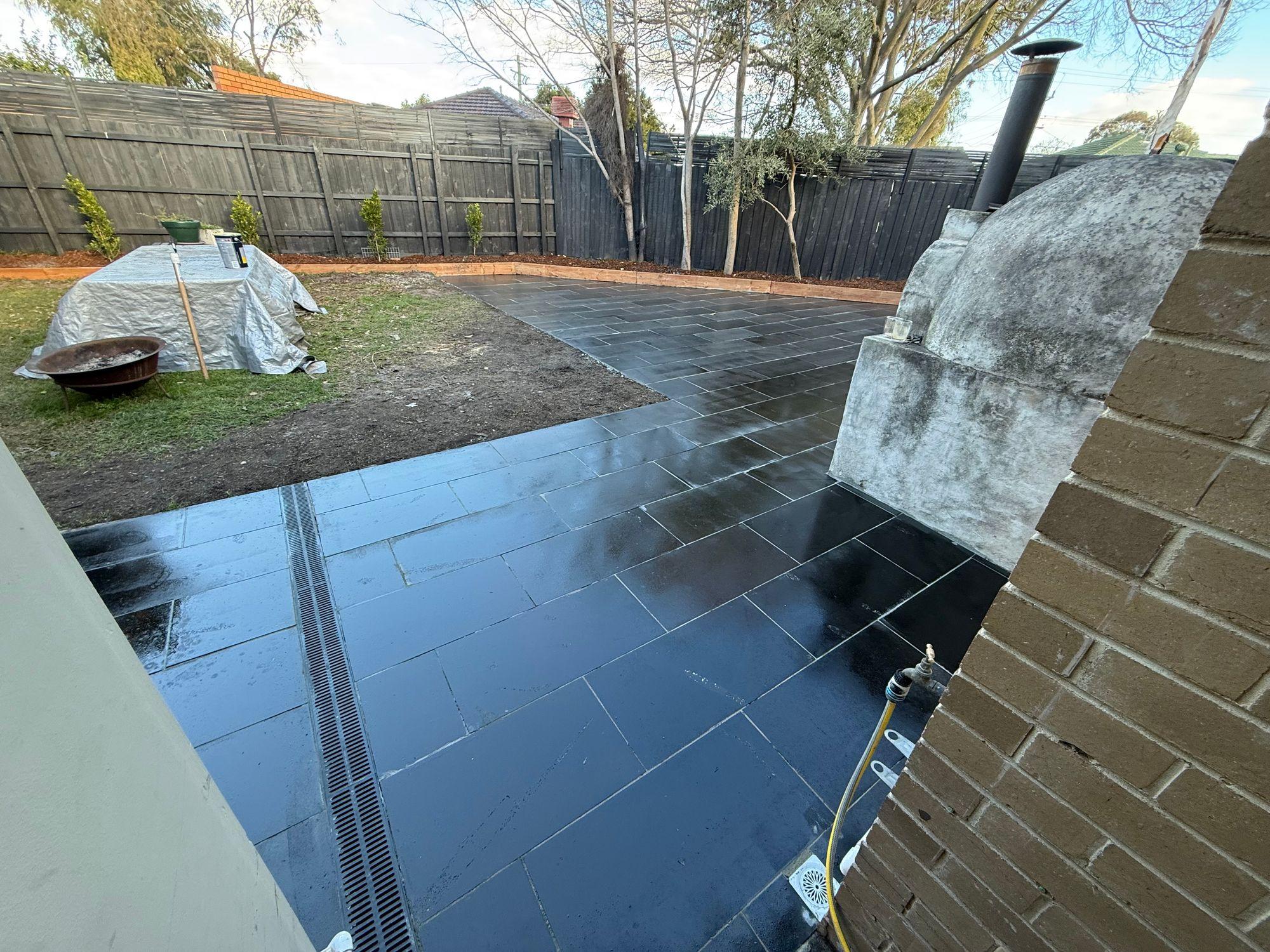
Paving should fall away from the house, so rain runs off to a drain, a garden bed or the lawn and never back against a wall or a door. We set a gentle fall, around 1 in 100, so water moves off without you noticing the slope underfoot, and add a strip drain where paving meets a doorway.
Hard surfaces soak up nothing. Every square metre of new paving sends its rain somewhere, so we work out where it will go before we lay a single paver. Existing pits get raised or lowered to the new finished height, and the paving stays below the house's weep holes.
Low blocks need the most care. On the streets near Gardiners Creek in Glen Iris, a heavy downpour can hit roofs and paving faster than the ground can take it, so paving that sheds to a drain and garden beds that soak up the rest are part of the plan from the start.
Do pavers need sealing?
Natural stone such as bluestone and travertine should be sealed. A penetrating sealer soaks into the stone and helps it resist oil, leaf and food stains without leaving a shiny film. Brick and concrete pavers can go unsealed, though sealing holds their colour and makes cleaning easier. Expect to reseal stone every few years.
We seal once the grout has cured and the paving is clean and dry, then show you how to look after it. A broom, a hose and a gentle wash now and then covers most of it.
Driveways, patios and pool areas are built differently
Driveway paving
A driveway carries a car every day, so the paving goes over a concrete base built for the weight, with bluestone, brick or pavers laid on top. If the work changes the crossover, the strip that crosses the nature strip to the road, check with your council first. In Monash, for example, it may need its own Vehicle Crossing Permit, separate from any building permit.
Patios and alfresco areas
A patio sits right against the house, so this is where the falls matter most. We shed the water away from the back door, add a strip drain where it's needed, and match the stone to the house: sawn bluestone for most, or travertine and large pavers for a lighter look.
Paths and step pavers
Front paths suit banded bluestone or brick. Side and garden paths often suit step pavers set in pebbles, lawn or artificial grass, which costs less than full paving and lets rain soak through. In Elsternwick we set 800 x 400 mm step pavers the owners supplied into a rock surround, beside a new artificial lawn.
Pool areas
Around a pool you want a surface that grips when wet. Travertine is the usual pick because its pale surface stays cooler underfoot, and textured bluestone works too, though dark stone warms up in full sun. The paving also has to suit the pool fence. Victoria's pool barrier checklist asks for a clear space around the fence with nothing a young child can climb, so we keep raised edges, steps and planters well clear of it.
Paving jobs we've done around the south-east
In Oakleigh we laid about 12 square metres of red brick paving. The owners sourced the bricks and pulled up their old concrete, and we carted the concrete away and laid the new brick in its place.
In Cheltenham the backyard was an overgrown jungle you couldn't walk through. We cleared it and built a crazy-paved path, laid on mortar and finished with a float grout: a wet mix poured over the stone and swept into every joint, with the crew cleaning straight behind it. Timber edging, artificial grass and a garden of Backyard Bliss lilly pillies finished it off.
The team did an excellent job of laying a consistent and level brick pattern using a whole range of old recycled bricks which varied in size and colour
Matthew's backyard was done in a week. Yve had us rework her existing pavers alongside reclaimed timber she already had, and that job took just a few days.
How long does a paving job take?
Most paving jobs take 2 to 5 days. A short path or a run of step pavers can be done in a day or two, and a typical patio in a few days. Crazy paving and anything on a new concrete base take longer, because the concrete, mortar and grout each need time to set before the next step.
Most paving jobs take 2 to 5 days on site. Bluestone or crazy paving on a new concrete base takes longer, because the base has to set before the stone goes down. You'll get the number of days with your quote.
Rain can push a start date back, and mortar and grout can't be rushed. The quote tells you how many days your job needs, and we keep you posted as each stage is done.
Why people pick Regal for paving
Michael Sees Every Site
He checks access, levels, drainage and what's under the old surface in person before he prices anything.
An Itemised Written Quote
The base, the paving, any removal and the clean-up are listed separately, so you know what you're paying for.
One Crew Start to Finish
The crew that digs out and compacts your base is the same crew that lays, grouts and seals the paving.
Local Since 2013
Family-owned and based in Clayton South, with $5M public liability cover and 60+ five-star Google reviews.
What Our Clients Have To Say About Us
“We engaged Regal Landscaping in Feb 2025 to lay heritage brick paving in our backyard. Michael was very responsive and helpful through the quoting process and during the work itself. …”
“Highly recommend working with Michael and his team. Not only were they professional, reliable, flexible, communicative and hardworking, but Michael talked us through every aspect of our project to ensure we got the outcome we wanted, while staying within …”
“Regal Landscaping have completely re-imagined our garden in a way I could not have thought possible. …”
60+ five-star Google reviewsRead them on Google
“Michael and his team did an excellent job installing our irrigation system, covering both our existing plants and future garden plans. They were friendly, professional, and left everything clean and tidy once the work was complete. …”
Get a paving quote
Call 0489 952 492 or send photos and rough measurements through the quote form. Tell us what the area is for, whether there's old concrete or paving to come up, and if you've already picked a paver. The quote is free.
We pave right across Melbourne's south-east, including Cheltenham, Oakleigh and Glen Iris. The full list is on our service areas page.
Paving FAQs
How much does paving cost per square metre in Melbourne?
It depends on the material, the base and what has to come out first. Concrete pavers and step pavers on crushed rock sit at the lower end, brick in the middle, and sawn bluestone and crazy paving at the top. Removing old concrete, a new concrete base, drains and steps are priced on top, and every quote is written up after a free site visit.
How long does it take to lay pavers?
Most paving jobs take 2 to 5 days on site. Small paths and step pavers are quicker. Crazy paving and anything on a new concrete base take longer, because the concrete, mortar and grout each need time to set. We give you the number of days in the quote, and the weather is usually the only thing that moves it.
Do you lay concrete driveways?
No, we don't pour concrete driveways. We do pour the concrete base that sits under driveway paving, then lay bluestone, brick or pavers on top. That gives you a driveway that suits the house and can be repaired one paver at a time. For a plain concrete or exposed aggregate driveway, a concreter is the right trade to call.
Is bluestone paving worth the extra cost?
For most patios, front paths and driveways, yes. Sawn bluestone is dense, it's Melbourne's own stone, and laid on a proper base it lasts for decades with little more than a wash and a reseal now and then. If the budget is tight or the area is big, concrete pavers do a good job for less money.
Can you lay pavers or bricks I've already bought?
Yes. Plenty of our clients supply their own. In Oakleigh the owners sourced the red bricks, in Elsternwick we laid step pavers the owners had bought, and we've relaid heritage paving from a mix of recycled bricks. Tell us what you've got at the quote, so we can check there's enough to cover the area plus cuts and breakages.
Do I need to seal my pavers?
Natural stone should be sealed. Bluestone and travertine are porous, so a sealer helps them resist oil, leaf and food stains and keeps them easier to clean. Brick and concrete pavers don't need it, though sealing holds the colour longer. Plan on resealing natural stone every few years, and we'll tell you what suits your stone.
Can you pave over existing concrete?
Sometimes. If the old slab is solid, sits at the right height and already falls away from the house, we can often lay paving over it. If it's cracked, too high against the house or falls the wrong way, it's better to break it out and start again. Michael checks this at the site visit and explains the choice in the quote.
Do you do paving in my suburb?
We pave across Melbourne's south-east from our base in Clayton South, including Cheltenham, Oakleigh, Glen Iris, Glen Waverley, Bentleigh East and the bayside suburbs. North and west Melbourne are usually outside our area. If you're not sure, call 0489 952 492 or send the quote form and we'll tell you straight.
Get a free quote
Tell us what you'd like paved, roughly how big it is, and whether there's old concrete or paving to come up. Photos help. Michael will call you back to book a site visit.