By Michael, owner of Regal Landscaping
We lay both at Regal Landscaping. Since 2013 we've put down 15,000 square metres of turf across Melbourne's south-east, real and synthetic, so I don't mind which one you pick. I just want it to suit the yard. Below are the two side by side, then what I look at on site to decide.
Artificial grass vs real grass at a glance
Synthetic comes out ahead in shade, with dogs and on water. Real grass is cooler on a hot day and outlasts it.
| What matters | Artificial grass | Real turf (Sir Walter Buffalo) |
|---|---|---|
| Hot afternoon, full sun | Far hotter than real grass, too hot for bare feet | Stays close to the air temperature |
| Deep shade | Fine, it needs no sun | Thins out where it gets little direct sun |
| Dogs | No holes, no mud, but wee has to be hosed off | Wears bare along fences and in dog runs |
| Water | None to stay green | Daily for the first few weeks, then deep soaks in hot spells |
| Regular upkeep | Blow off leaves, brush the blades up, hose it down | Mowing, feeding and watering |
| Groundwork | Dig-out, compacted crushed rock, crusher dust, fixed edges | Soil prep and good topsoil underneath |
| When it wears | It doesn't grow back, worn areas get replaced | Grows back, and thin spots can be returfed |
| End of life | Plastic that has to be lifted and thrown out | Keeps going as long as it's looked after |
Most yards don't come down to one row. A shady side path and a sunny back lawn can have different answers, and one yard can end up with a bit of both.
The pros of artificial grass
Artificial grass is at its best where real grass keeps failing. If you've returfed the same shady strip twice, or the dog has turned the back fence line into a dirt track, synthetic fixes a problem that more seed and fertiliser never will.
Real turf needs sun to keep its leaf, so under a big tree or between two close fences it slowly goes thin. Synthetic doesn't care how much light it gets.
Dogs can't dig holes in it or wear tracks into it, and nobody walks mud through the house after rain. Around a pool there are no clippings blowing into the water either.
There's no mowing and no watering to stay green. For a rental, a holiday house or an owner who travels a lot, that can decide it. It's also ready to use the day it's laid, where new turf needs a few weeks of care before you can play on it.
The cons of artificial grass
Heat is the biggest downside in a Melbourne summer. Synthetic blades soak up sun and have no water in them to cool off. A 2024 review of 23 studies found synthetic sports surfaces ran between 9.4 and 33.7 degrees hotter than natural grass. On a north or west facing Melbourne backyard with no shade, that rules out bare feet, kids and dogs on a hot afternoon.
The groundwork is a bigger job than people expect. Old soil comes out, crushed rock goes in and gets compacted with a fall away from the house, then a smooth layer of crusher dust and solid edges. Skip any of that and the turf puddles, sinks where people walk and lifts at the edges. We set out every step on our artificial grass installation page, so you can check any quote against it.
You still have to look after it. Leaves need blowing off before they rot into the backing, the blades need a brush every month or two, and with dogs it needs a regular hose down in warm weather or it starts to smell.
It also wears out. Sun fades it, traffic flattens it, and a barbecue, fire pit or sun bouncing off a window can melt the fibres. When it's done, the whole surface comes up and goes to the tip. A real lawn that's struggling can usually be brought back.
Is fake grass or real grass better with dogs?
Fake grass is usually better for dogs that dig, run fence lines or wreck a lawn faster than it can grow back. Real grass is better for a dog that spends hot days outside, because synthetic gets too hot for paws in full sun. In a shady yard that worry mostly goes away.
If you go synthetic for a dog, ask for a fully permeable backing so wee drains straight through, a shorter and denser pile that hoses clean, and edges fixed down so a digger can't get underneath. Then plan on a weekly hose down through summer.
What drives the cost of artificial grass in Melbourne?
The cost of artificial grass in Melbourne comes down to the groundwork more than the turf. Two yards the same size can quote very differently once you count the dig-out, the access and what has to go to the tip. These are what move the number:
- How deep the dig-out goes, and how much crushed rock and crusher dust it takes to get a firm, even fall.
- Access: a machine through a wide side gate is quicker than barrowing everything through the house.
- Anything that comes out first. Old lawn, roots, rubble or worn synthetic all add time and tip fees.
- New timber edging along fences and beds costs more than fixing to paving that's already there.
- The turf itself, because pile height, thatch and a pet-friendly backing all change the price of the roll.
- Size and shape. Small, fiddly areas with lots of cuts cost more for each square metre laid.
Real turf usually costs less to lay over the same area, but it needs watering to get going and regular care after that. We quote every job after a free site visit, and we're happy to price both options side by side so you can compare.
When real turf is the better call
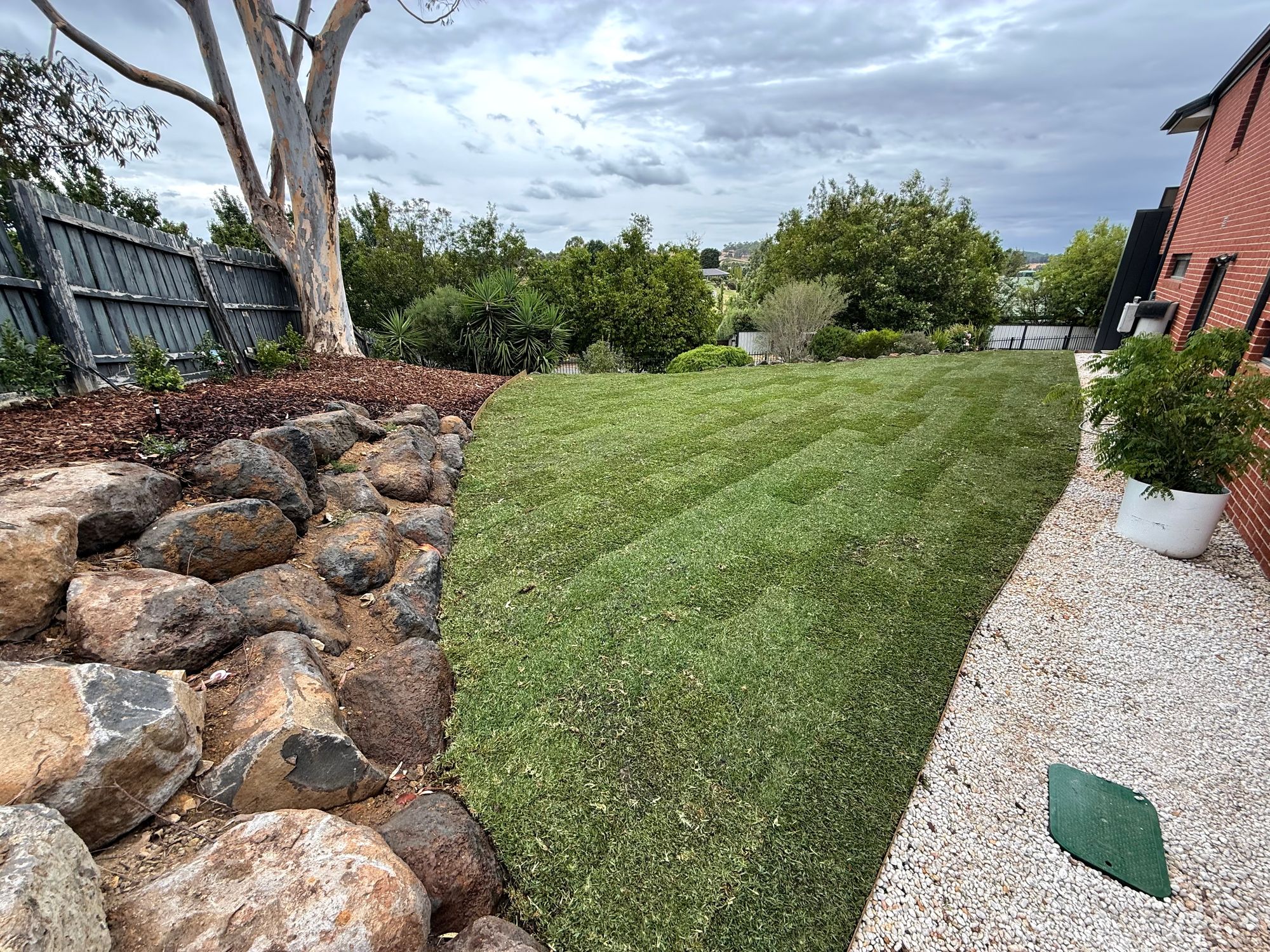
Real turf is the better call in any yard that gets good sun and has someone willing to water it for the first few weeks. It stays cool on a hot day and grows back from the roots when it gets worn.
In my experience, when new turf dies it's the watering, not the turf. Commit to watering every day for the first two to three weeks and Sir Walter Buffalo will settle in and look after itself. Skip it and the lawn was dead the day it went down.
If that sounds like your yard, have a look at how we do instant turf, from stripping the old surface and preparing the soil to laying the rolls. And when a real lawn does play up later, it can usually be diagnosed and fixed. Our guide to brown patches in lawn covers the usual causes and what to do about each one.
What we see on jobs around south-east Melbourne
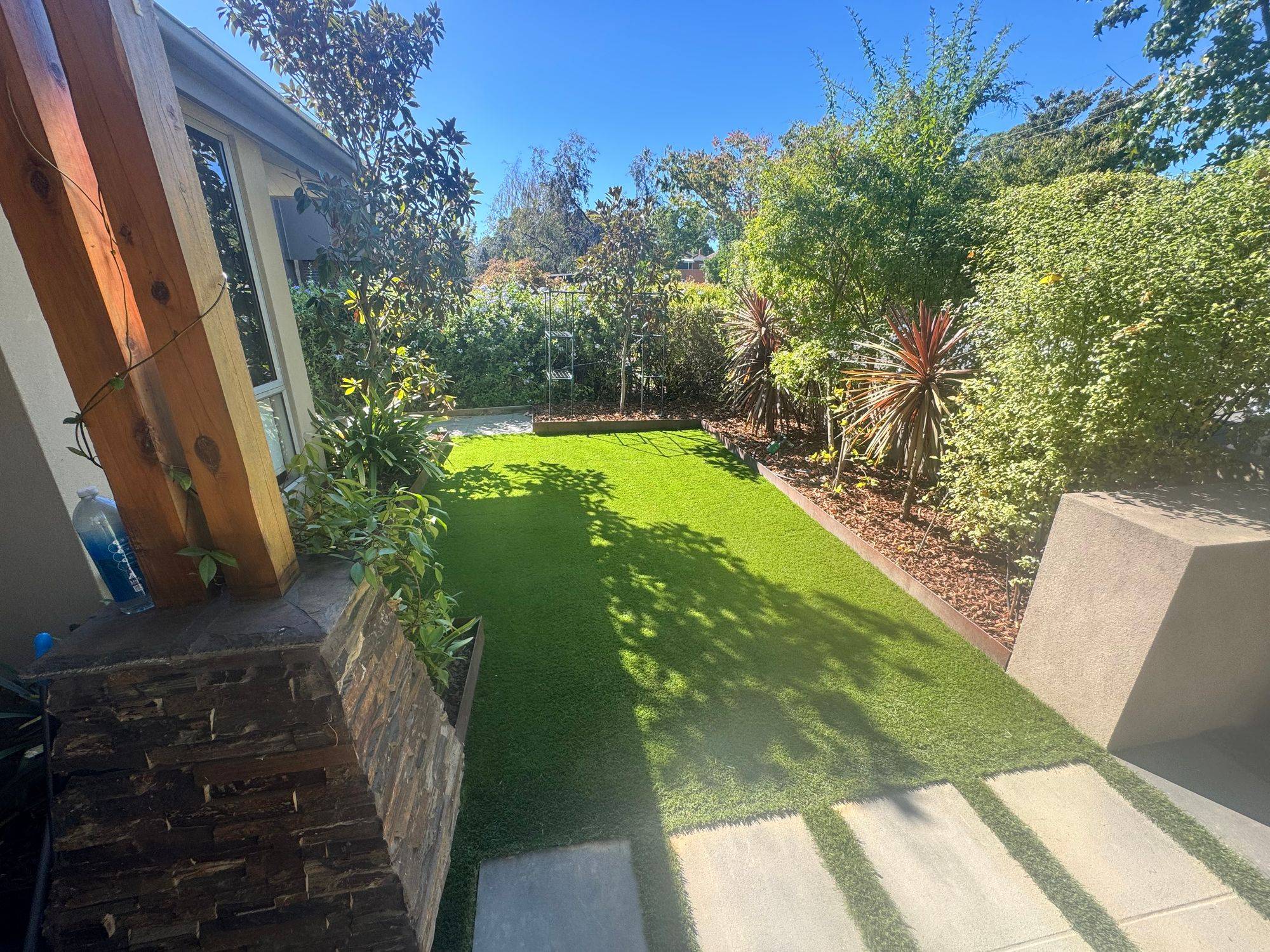
The yards where synthetic makes the most sense tend to have more than one problem at once. In Cheltenham we took on a backyard that had turned into a jungle. You couldn't walk through it. We cleared the lot, built a crazy paved path, laid artificial grass and planted a garden with Backyard Bliss lilly pillies. The synthetic went down on a crushed rock and crusher dust base, laid by the same crew that did the paving.
The ground changes the job too. Around Cheltenham and Clayton South the soil is sandy and drains fast. Up toward Glen Waverley and Mount Waverley it's often heavy clay that holds water, so the fall of the base matters even more under synthetic.
When I come out, I look at where the sun sits on a summer afternoon, where the rain runs, how we'll get machines in, and what you'll actually use the yard for. Those four things usually settle it. If you're still torn between the two, give us a call on 0489 952 492 and book a free quote. We'll tell you straight which one we'd put in.
Artificial grass questions, answered straight
Does artificial grass get too hot in Melbourne?
Yes, in full afternoon sun it gets much hotter than real grass and can be too hot for bare feet, kids and dogs. In shade or part shade it's comfortable. For an open north or west facing yard, plan some shade or look at real turf.
How long does artificial grass last?
It depends on the product, how much sun and traffic it gets, and how well the base was built. A cheap product on a poor base wears out years sooner than a good one laid properly. Ask for the product name and its warranty in writing before you sign anything.
Does artificial grass smell with dogs?
It can if wee sits in the backing or the base. A fully permeable backing on a free-draining base, plus a regular hose down in warm weather, keeps it fresh. Enzyme cleaner sorts out any spot the dog favours.
Is artificial grass cheaper than real turf?
Not up front. Laying synthetic usually costs more than laying real turf over the same area, mostly because of the dig-out and base. It saves on water and mowing over the years, but it eventually needs replacing, where a looked-after lawn keeps going.
Can I have artificial grass in one part of the yard and real grass in another?
Yes, and it suits a lot of yards. Synthetic goes in the shady side path or the dog run, and real turf goes where the sun hits. Clean edging between the two keeps it looking like one yard.
Michael has run Regal Landscaping since 2013 and comes out to measure up every job himself. More of his lawn and garden guides are on the blog.